
Breakdown repair
When equipment stops, the question is not what is wrong with it: it is how long the department has to work without it. Call us and you get an engineer who already knows the machine, a diagnosis on the first visit wherever the fault allows it, and a straight answer about the part and the time.
What happens when you call
1. You describe the fault to someone who understands it. The call is taken by an engineer, not a call centre. We ask for the make, model and what the machine is doing, because that determines what goes in the vehicle. 2. We tell you when. A time, not a promise to revert. If we cannot reach you that day, you hear that on the call, so you can make the arrangements a department has to make when a machine is down. 3. Diagnosis on site. The engineer works on the equipment in front of you, with the technician or the sister who uses it. A surprising number of calls end here, because the fault is a setting, a supply issue, or an accessory rather than the machine. 4. A quotation before any parts work begins. Part, price, lead time. Nothing is ordered or fitted before you have approved it. 5. A signed service report. Fault found, work done, parts replaced, condition on handover. It goes into the equipment history sheet, which is what an audit will ask for two years from now.
What we repair
Twenty-four years of contracts across ICU, theatre, imaging, laboratory and ward equipment. The equipment pages list the machines by department, along with what typically fails on each.
We work on equipment regardless of who supplied it. Most of the equipment we maintain was bought from someone else, often a manufacturer whose own service presence in Gujarat ended years ago.
On site or in the workshop
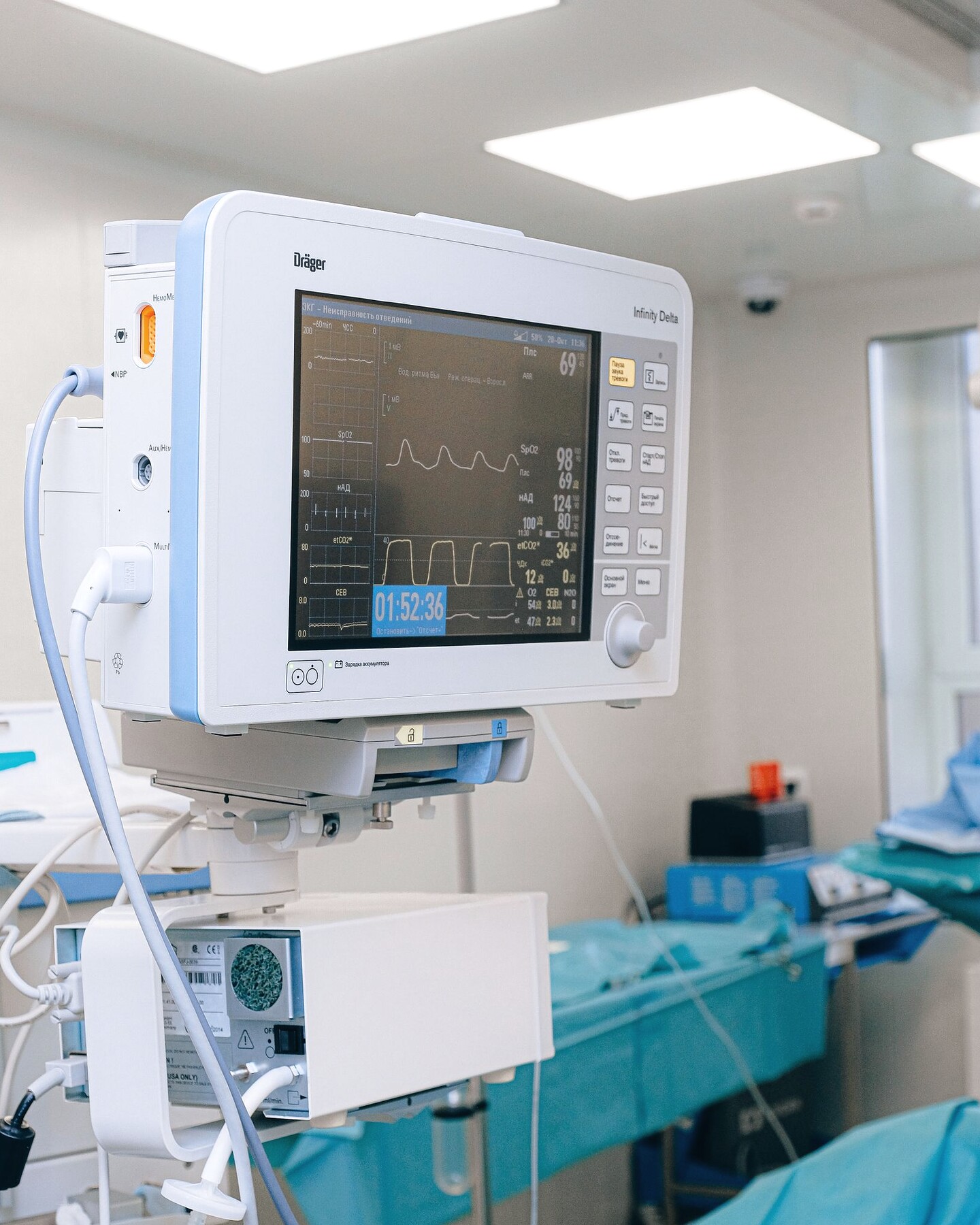
On site covers the majority of calls: monitors, pumps, ventilators, suction units, OT lights, cautery units, autoclaves, centrifuges, warmers and the daily failures of ward equipment. Nothing leaves the hospital that does not need to.
At the Ahmedabad workshop we handle what needs a bench and instruments: board-level repair, motor and handpiece rewinding, orthopaedic power-tool overhaul, OT table hydraulics and column work, and any repair that should be run under load for a period before it is returned to a clinical area.
Equipment moved to the workshop is collected, logged, and returned installed and tested. It is not handed back at a counter.
Spare parts, stated honestly
Parts come from three places: manufacturer channels, the refurbished market, and repair of the existing assembly. Which one applies depends on the age of the machine and what the manufacturer still supports.
Current equipment from a manufacturer with an Indian presence is usually a few days. Discontinued models take longer and sometimes end in a recommendation to replace rather than repair. We give you that assessment early, in writing, because a hospital cannot plan around an open-ended wait.
Coverage
Ahmedabad and Gandhinagar are served directly from our office and workshop. Work runs across India. Our contracts and repair history cover institutions from Kutch and Banaskantha to Valsad, the Dangs and the tribal belt, largely through the district health system and the ORET programme.
Questions about breakdown repair.
Not answered here? Call +91 98250 70790 and speak to someone who works on the equipment.
01Do you attend breakdowns for hospitals without a contract?
Yes. Contract holders are scheduled first, which is one of the reasons hospitals take contracts, but we attend chargeable calls from any institution. The visit is quoted before we travel and the repair is quoted before we start work.
02Will the engineer carry the part?
For common failures on equipment we hold contracts on, usually yes: the vehicle carries fuses, sensors, valves, tubing, filters, castors and the boards that fail most often. For a first call on an unfamiliar machine, the first visit is diagnosis and the part follows. We tell you which of the two you are getting when you call.
03Can equipment be repaired on site or does it have to come to you?
Most of it is repaired on site. Equipment goes to the Ahmedabad workshop when the repair needs a bench, a test rig, or work that cannot be done in a clinical area: motor rewinding, board-level repair, OT table hydraulics, and anything requiring a soak test before it goes back into service.
04What if the part is obsolete?
We say so, in writing, with what the options actually are: refurbished stock, a functional equivalent, repair of the existing assembly, or replacement of the machine. We do not keep a machine on a workbench for weeks while a part that does not exist is searched for.
05Do you provide a standby while our equipment is being repaired?
For some categories, subject to availability, and it is written into contracts where the equipment is critical enough to justify it. Ask when you call and we will tell you what is available that day rather than what is possible in principle.
06Which areas do you cover?
Ahmedabad and Gandhinagar are covered from our own premises. We work across India, and travel is scheduled against the order. Travel outside the two cities is scheduled rather than same-day unless it is a contract commitment.
Preventive maintenance
Discuss your equipment
requirements.
Contract quotations follow a precise site inspection and equipment audit, not a phone call. Contact us to schedule an assessment.
Head Office
11 Vrundavan Park, Sec 22Gandhinagar 382021
Gujarat, India
Workshop
A-207, Sumel Safal-6Dudheswar, Ahmedabad 380004
Gujarat, India